
Why Private Venues Beat Hotels for Leadership Offsites
Team Serana
February 17, 2026

The standard corporate retreat Austin playbook is broken. Teams check into a high-traffic downtown hotel, shuffle between windowless ballrooms and crowded lobbies, and try to solve complex problems while surrounded by tourists and wedding parties. The result is what you might call "context collapse"—that disorienting feeling when you're mapping out your company's next eighteen months while a bachelorette party rolls past the conference room door.
When leadership teams stay in public spaces, they never truly leave the office mindset. They remain guarded, performative, half-present. Real strategic breakthroughs require something different—an environment that removes the friction of the city and replaces it with the psychological safety of total seclusion.
Why Hotels Fail at Leadership Offsites
Most hotels are designed for volume, not deep work. They optimize for occupancy rates and banquet revenue, not for the kind of sustained focus that transforms a leadership team's trajectory. For a leadership offsite Austin, the distractions of a 300-room property create a fragmented experience that works against your goals.
Context Collapse Kills Psychological Safety
In a public hotel, your team is never truly alone. You share elevators with strangers, dining rooms with other companies, and hallways with housekeeping carts that appear at the worst possible moments. This constant low-level awareness of "others" prevents the vulnerability required for honest debate.
Google's Project Aristotle identified psychological safety as the primary driver of team performance. You cannot create that safety when your "private" strategy session is separated from a noisy hallway by a thin partition. When your CFO is about to share concerns about runway, she shouldn't have to lower her voice because a hotel employee is restocking the coffee station.
The math is simple: if your team spends even 15% of their mental energy managing the presence of outsiders, that's 15% less cognitive capacity directed at the problems you flew everyone in to solve.
Shared Rooms Create Social Fatigue
Hotels often push team members into shared rooms or cramped suites to save on costs. This compounds over the course of a multi-day retreat.
Introverts and high-level executives need a place to retreat and process information individually. After six hours of intense strategic discussion, even the most extroverted founder needs solitude to let ideas settle. Without private quarters, team members experience social fatigue that accumulates like sleep debt—leading to diminished engagement during the actual working sessions when it matters most.
By day two of a hotel-based offsite, the energy in the room shifts. People become shorter with each other. The quality of ideas drops. What started as a strategic planning session devolves into a group of tired people waiting for permission to go home.
The alternative is giving each person their own space—a private cabin, a separate room, somewhere they can close a door and be alone with their thoughts. At Serana, each team member gets their own luxury cabin, which creates an interesting dynamic: people show up to collaborative sessions because they want to, not because they have nowhere else to go. The conversations are better because everyone has had the chance to recharge.

What Private Venues Get Right
Private venues offer environmental control that hotels cannot match. When you own the entire space—even temporarily—the environment becomes a tool for productivity rather than a hurdle to overcome.
All-Inclusive Pricing Eliminates Decision Fatigue
A corporate retreat Austin should be about high-level strategy, not logistics. But hotel-based offsites inevitably pull founders into administrative quicksand: negotiating AV fees, managing room blocks, coordinating meal times around the hotel's other events, fielding complaints about the minibar charges.
Every one of these micro-decisions depletes the same cognitive resources you need for strategic thinking. Psychologists call this decision fatigue, and it's dangerous for founders who already operate at the edge of their mental bandwidth.
Private venues often operate on all-inclusive models that eliminate this friction entirely. At Serana, the $1,000/night flat rate covers everything—no line-item billing for coffee service, no surprise charges for extending a session by an hour, no negotiating with a banquet manager about whether the projector is included. This allows founders to spend their decision-making capacity on their 90-day roadmaps instead of reviewing invoices.
Nature Exposure Improves Cognitive Function
Moving a team offsite provides more than just a nice view. The research on nature exposure and cognitive function is consistent: time in natural environments stimulates serotonin production, lowers cortisol levels, and restores the directed attention that knowledge work depletes.
Stanford researchers found that walking meetings and outdoor-accessible environments generate 15–20% more ideas than traditional office settings. This isn't about the walking itself—it's about the novel environmental stimuli that activate different neural pathways than the ones you've worn smooth in your usual conference room.
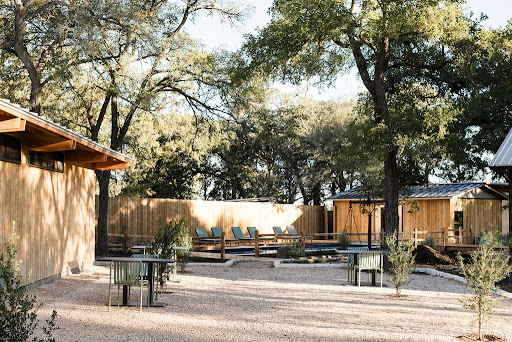
The practical implication is that venue selection directly impacts output quality. A property with acreage to explore—Serana sits on over 50 acres of Texas Hill Country—provides the calm necessary to recharge the prefrontal cortex after intense sessions. Your team can take a walk between discussions, sit under a post oak tree to process a difficult conversation, or simply look at something other than walls for a few minutes.
This isn't soft thinking. It's applied neuroscience.

Wellness Tools Maintain Peak Performance
A successful retreat isn't just about the hours spent in a conference room. It's about state management—keeping the leadership team in the optimal cognitive and emotional state for high-stakes thinking. If your team is sluggish, your strategy will be uninspired. If they're anxious, your risk assessments will be distorted.
Physical Recovery Maintains Cognitive Function
Modern private retreat venues for leadership teams are integrating high-end physical recovery tools. This isn't about "pampering." It's about maintaining peak cognitive function across a multi-day intensive.
NASA-funded research on workplace performance found that employees who exercise during the day work at full efficiency until the end of their shift, while non-exercisers see a 50% drop-off in productivity during the final two hours. For a leadership offsite, those final hours are often when the most important decisions get made—when the team has finally worked through the preliminary discussions and reached the hard choices.
Access to a gym, sauna, and cold plunge allows executives to reset their nervous systems between high-stress sessions. A 15-minute cold plunge after a difficult conversation about organizational changes isn't indulgence; it's a deliberate intervention to clear stress hormones and restore baseline function. At Serana, these tools are standard features, available whenever someone needs them—not scheduled into a spa appointment three days out.
Enterprise-Grade Connectivity in Seclusion
The biggest fear for a startup founder at a team offsite Austin is being disconnected at the wrong moment. You cannot have a productive retreat if the leadership team is anxious about a "dark" Wi-Fi zone. That anxiety bleeds into every conversation, creating a constant low-level distraction that undermines the seclusion you sought in the first place.
Private venues must provide enterprise-grade technology infrastructure. This seems obvious, but many rustic properties treat connectivity as an afterthought—a consumer-grade router struggling to serve a dozen devices simultaneously.
The solution is purpose-built infrastructure. Starlink-backed co-working spaces ensure that while the team is secluded on 50+ acres, they remain reachable for critical decisions. The goal isn't to be constantly connected; it's to remove the anxiety of potential disconnection. When your CTO knows she can jump on a video call if something catches fire, she can actually be present in the strategy session instead of mentally rehearsing contingency plans.

Designing the Ideal Offsite Flow
The structure of the venue should dictate the flow of the day. Too many offsites fail because they import office rhythms into a new setting—eight hours of scheduled meetings with brief breaks, as if changing the wallpaper changes the dynamic.
The most effective retreats alternate between convergent work (everyone together, making decisions) and divergent work (individuals or small groups exploring ideas independently). The venue needs to support both modes.
Hub and Spoke Layout
The most effective venues provide what you might think of as a "hub and spoke" layout:
The Spoke: Private luxury cabins for each team member. This ensures everyone has a sanctuary for rest and reflection. When someone needs to process a difficult conversation or simply escape the group dynamic for an hour, they have somewhere to go that feels like theirs.
The Hub: A dedicated co-working space designed for collaboration—not a repurposed dining room with folding tables, but a purpose-built environment with the right furniture, lighting, and acoustics for sustained group work.
The Commons: Outdoor spaces where the "unstructured" conversations happen. Fire pits, hiking trails, porches with comfortable seating. Often, the best ideas emerge here—in the liminal space between formal sessions, when people are relaxed enough to say what they actually think.
This layout creates natural transitions throughout the day. People move between spaces based on what the work requires, rather than sitting in the same room for eight hours because that's where the projector is.
Face-to-Face Communication Drives Results
Research consistently shows that face-to-face communication is dramatically more effective than digital communication for complex problem-solving—some studies suggest 34 times more effective for tasks requiring nuance and trust-building. This is why you're investing in an offsite in the first place.
But simply putting people in the same room isn't enough. The environment shapes the quality of interaction. Companies that choose venues facilitating both deep focus and relaxed bonding report productivity increases of up to 26% in the months following a retreat. The gains come not just from the decisions made during the offsite, but from the strengthened relationships and shared context that improve collaboration long after everyone returns home.
Selecting the Right Austin Venue
Austin's retreat market is split between two poles: downtown luxury hotels with all their attendant distractions, and rustic ranches that offer seclusion but lack the infrastructure for serious work. The gap in the market is the private luxury segment—places that offer the amenities of a five-star hotel with the total seclusion of a private estate.
When evaluating a leadership offsite Austin, the questions that matter are:
Exclusivity: Will yours be the only team on-site? If you're sharing the property with other groups, you've just recreated the hotel problem in a different setting.
Infrastructure: Is there dedicated co-working space with reliable high-speed internet? Can you run a video call without worrying about bandwidth? Is the space designed for work, or are you improvising in a living room?
Restoration: Does the venue offer wellness tools—sauna, cold plunge, gym—to keep the team sharp across multiple days? Or will everyone be running on caffeine and declining energy by day three?
Privacy with Community: Can team members retreat to their own space when needed, while still having natural opportunities for connection? The balance matters.
A retreat is an investment in your company's strategic direction and leadership alignment. The venue you choose either amplifies that investment or undermines it. By stepping away from the hotel circuit and into a private, nature-focused environment, you ensure that the only thing your team focuses on is the future of the business.
We built Serana because we couldn't find this combination ourselves—the seclusion of the Hill Country, the infrastructure for real work, the individual cabins that let people recharge, the wellness amenities that keep minds sharp. It's the retreat we wanted to attend, designed for the kind of focused work that actually moves companies forward.